CURRENT Dx Tx Psychiatry
Skyscape Medpresso IncMedical
4.34.00 Reviews
- Version
- 3.13.1.1
- Installs
- 10.00K
- Age Rating
- Everyone
Screenshots
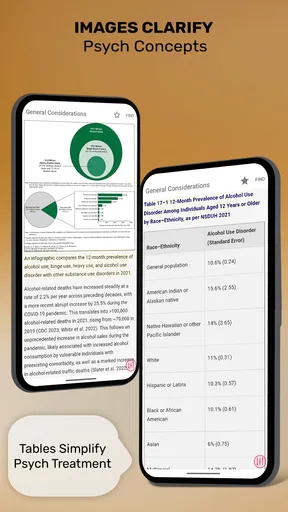
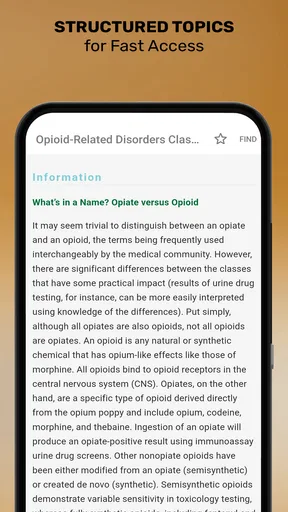
Our Review of CURRENT Dx Tx Psychiatry
 Analysis by Appyee
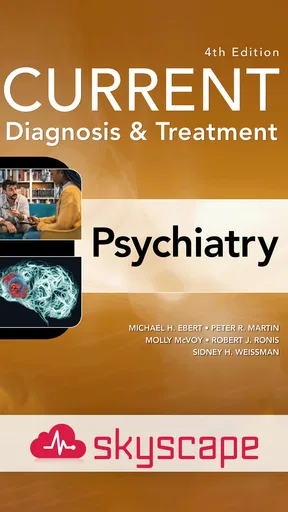
I approached CURRENT Dx Tx Psychiatry as a practical medical reference rather than a course, a patient diary, or a replacement for clinical judgment. It is a free psychiatry app from Skyscape Medpresso Inc, aimed at quick consultation across adult and pediatric disorders, treatments, and tests. That focus matters: the value here is not entertainment or long-form teaching, but the ability to get oriented when a clinical topic needs to be checked quickly.
My overall impression is that it makes the most sense for medical students, residents, nurses, and clinicians who already understand basic psychiatric language and want a compact reference on a mobile device. It can also help someone revising a topic before a discussion or appointment, although health decisions should still be based on a qualified professional’s assessment. The app carries an average rating of 4.3 from around 67 ratings, with over 10K installs, which suggests a modest but established audience rather than a mass-market health tool.
How the app feels during a quick reference search
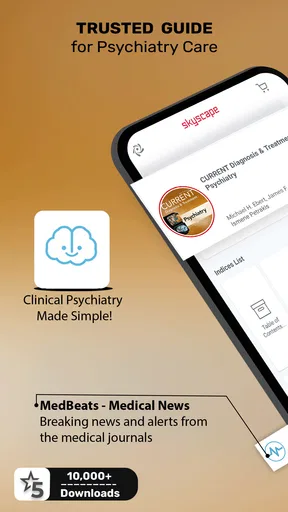
The strongest reason to use this app is speed of access. A reference tool earns its place when it reduces the time between remembering a clinical question and finding a useful starting point. The short description, “CURRENT Dx Tx Psychiatry,” sets that expectation clearly: diagnosis and treatment are at the center, not lifestyle coaching or general mental-health content.
In a realistic workday, I would use it before a teaching session, while reviewing a patient presentation, or during revision when a disorder’s usual assessment and management need a quick refresher. The important distinction is that this is a point-of-care reference, not a guided lesson. I would open it with a specific question already in mind rather than browse aimlessly and expect the app to teach the entire subject from the beginning.
That workflow also explains why the app may feel more useful to an experienced learner than to a first-time reader. Someone who knows the difference between diagnostic criteria, differential diagnosis, and treatment planning can move through a concise reference efficiently. A beginner may need fuller explanations, examples, and context from a textbook or structured course before this app becomes genuinely comfortable to use.
The coverage of both adult and pediatric disorders is a meaningful advantage. It encourages a broader habit of checking whether age changes the way a psychiatric presentation should be considered. I would still treat pediatric material with particular care, because developmental stage, family context, safeguarding, and local practice standards can change how information is applied. The app can support preparation, but it should not be used as an isolated decision-maker.
What happens when the reference is used heavily
Heavy use is likely to come in bursts rather than as a continuous all-day activity. Psychiatry revision often involves moving between related subjects: a disorder, its assessment, possible tests, and treatment options. That kind of repeated consultation is where a focused reference can be more convenient than carrying a large textbook or opening several unrelated web pages.
My practical advice is to use it in short, deliberate passes. Start with the clinical problem, check the relevant section, then write down the point that matters for your current task. This prevents a quick-reference app from becoming a substitute for reading. It also makes it easier to notice when a topic needs a deeper source, especially if the situation involves comorbidity, medication safety, unusual presentation, or a child or adolescent.
One useful trade-off is breadth versus depth. Because the app brings together adult and pediatric psychiatry, disorders, treatments, and tests, it can help connect subjects that are often studied separately. At the same time, a compact reference cannot provide the same depth as a specialist textbook, a formal guideline, or a supervised clinical discussion. I would use it to frame the next question, not to close every question.
Another sensible workflow is to compare what you find with the policy or guidance used in your workplace or school. Treatment practice can depend on local formularies, referral pathways, monitoring requirements, and professional standards. The app’s concise format is useful for orientation, but local sources remain important when the information will affect real care.
Reliability, updates, and responsible use
The app was released on March 6, 2019, and its current version is 3.13.1.1. Those details make version awareness important for a medical reference. I would check that the app is receiving the version intended for my device and avoid assuming that a concise entry automatically reflects every current local recommendation. A reference can be useful and still require verification before it informs a prescription, referral, or urgent decision.
Reliability in this context has two meanings. The first is technical reliability: whether the app opens, responds, and lets me reach the material without unnecessary friction. The second is clinical reliability: whether the content is suitable for the precise situation in front of me. Even when an app is stable, neither kind of reliability removes the need for professional judgment.
That distinction is especially important for treatment information. I would not use a brief mobile entry to independently start, stop, or change psychiatric medication. The safer approach is to use the app to prepare questions, review terminology, or organize a discussion with a qualified clinician. For students, it can support revision; for professionals, it can serve as a convenient reminder; for patients, it should remain educational background rather than personal medical advice.
The age rating is Everyone, which makes the app broadly accessible from a store-classification perspective. That does not mean every subject is simple or suitable for unsupervised interpretation. Psychiatry includes sensitive and clinically complex material, so the responsible boundary is clear: accessibility of the app should not be confused with suitability for making individual diagnoses.
Device demands, cost, and practical limitations
The minimum operating-system requirement is Android 7.0, so the app is not aimed only at the newest phones. That is helpful for people using an older compatible device, particularly students who want to keep a medical reference available without replacing their phone. I would still leave enough storage and keep the operating system reasonably maintained, because medical references are frustrating when a device is already struggling with general performance.
The app itself is free to install, but in-app purchases range from $54.99 to $74.99 per item. That is the most important financial point to understand before relying on it as a long-term reference. The free entry point makes it easy to test the workflow, but the possible purchase cost is substantial enough that I would first decide whether the depth and format suit my study or clinical routine.
For a student, the purchase decision should be based on frequency of use rather than curiosity. If I only need occasional general information, a library textbook, institutional resource, or established professional guidance may offer better value. If I repeatedly need a portable psychiatry reference and prefer this format, the paid material may become easier to justify. Either way, I would inspect what is available before spending money and compare it with resources already supplied by a university or employer.
Resource demands are best judged by the kind of work being done. A short lookup should be lighter than a long study session, but the app’s real burden is not only battery or storage. The bigger demand is attention: concise clinical information can look definitive when it is actually a starting point. I found that the app works best when I pair it with a note-taking habit and a deliberate check of context.
Who will benefit most from it
I would recommend this app most readily to people who already have a working vocabulary in psychiatry. A resident preparing for rounds, a student reviewing disorders before an exam, or a nurse refreshing treatment-related terminology could all benefit from having adult and pediatric material in one focused place.
It may also suit clinicians who dislike searching broad health websites for a narrow psychiatry topic. General search results often mix patient education, advertising, outdated pages, and unrelated discussions. A dedicated reference can reduce that noise and make a quick review feel more purposeful. The trade-off is that the user must know when a quick reference is enough and when a primary source or current guideline is required.
I would be more cautious about recommending it to someone looking for emotional support, therapy exercises, crisis assistance, or a personal symptom checker. Those are different needs. This app’s emphasis is diagnosis, treatment, and tests, so it is not the right tool for managing distress in the moment or deciding what a personal symptom means.
It is also not my first choice for someone who learns best through extensive explanations. A comprehensive textbook, lecture series, or supervised teaching environment will usually be better for building concepts from the ground up. The app is most effective as a companion: something I open after learning a topic, before discussing it, or when a familiar subject needs a fast refresher.
Three practical habits that improve the experience
First, I would search with a defined purpose. Instead of opening the app and reading randomly, I would identify whether I am checking a disorder, a treatment question, or a test-related point. This simple distinction keeps the session short and makes it easier to recognize when the answer needs confirmation elsewhere.
Second, I would separate “reference found” from “decision ready.” Finding a relevant entry can help organize thinking, but it does not establish that the information applies to one particular patient. This is especially valuable when symptoms overlap, when several diagnoses are possible, or when age and developmental context change the interpretation.
Third, I would use the adult and pediatric scope as a prompt to check assumptions. If a familiar presentation involves a child or adolescent, I would pause before transferring adult expectations directly. That is a small but important benefit of having both areas represented in one app: it encourages comparison, while also reminding me that comparison is not the same as equivalence.
A fourth habit is financial. I would use the free version to judge navigation and usefulness before considering any in-app purchase. Since individual items can cost between $54.99 and $74.99, the decision deserves more thought than a casual download. The right question is not whether the app looks convenient once, but whether it will become part of a repeated, reliable study or reference workflow.
My performance verdict
After weighing its purpose, scope, and limitations, I see CURRENT Dx Tx Psychiatry as a focused companion for psychiatry learners and professionals rather than an all-purpose mental-health app. Its perceived speed comes from narrowing the subject to clinical psychiatry, and its usefulness grows when I approach it with a specific question. The adult and pediatric coverage gives it more range than a reference limited to one population, while the inclusion of treatments and tests makes it relevant beyond simple diagnostic definitions.
The main friction is the gap between a free installation and the possible cost of in-app content. The other limitation is conceptual: quick reference material can support judgment but cannot replace supervision, current local guidance, or a full assessment. Those are not minor details for a medical app; they determine whether the tool is being used responsibly.
For my own use, I would keep it as a revision and consultation aid, especially when I need a compact way to revisit a psychiatry topic without opening a large textbook. I would skip it if I wanted therapy support, crisis help, a personal diagnosis, or a richly illustrated beginner’s course. If your needs match its narrow purpose and you are comfortable checking important decisions against authoritative clinical sources, it is a sensible specialist reference to try before deciding whether the paid material earns a place in your routine.
Verdict
Strengths of CURRENT Dx Tx Psychiatry
- Concise diagnostic guidance supports quick clinical reference.
- Covers common psychiatric conditions in an organized format.
- Useful for students reviewing DSM-related terminology.
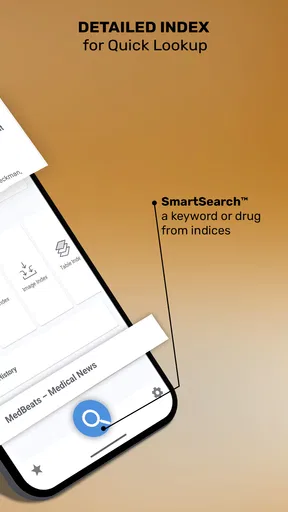
- Searchable content can help locate topics efficiently.
- Works as a portable reference during study or clinical preparation.
Limitations of CURRENT Dx Tx Psychiatry
- Should not replace a full psychiatric assessment or professional judgment.
- May offer limited detail on treatment planning and follow-up care.
- Terminology and recommendations may require checking against current guidelines.
- Content may be less useful for users seeking patient-friendly explanations.
- Offline access and some features may depend on the app version.
Other Releases by Skyscape Medpresso Inc
View All
Saunders Comp Review NCLEX PN
Medical4.6

Lippincott Review for NCLEX-PN
Medical4.7

Board Review Series-Pathology
Medical0.0

Veterinary Advisor: Dogs Cats
Medical4.4
Similar Picks in This Category
View All
WebMD: Symptom Checker
WebMD, LLC4.1

Microphone Amplifier
DOSA Apps4.2

Anatomy Learning - 3D Anatomy
3D Medical OU4.5

Period Tracker and Calendar
SimpleInnovation4.9

GoodRx: Prescription Coupons
GoodRx4.8

CVS Health
CVS Pharmacy4.5
Frequently Asked Questions
What is CURRENT Dx Tx Psychiatry, and who is it designed for?
CURRENT Dx Tx Psychiatry is a clinical reference app focused on psychiatric diagnosis and treatment information. It is primarily intended for psychiatrists, residents, medical students, mental-health professionals, and other qualified healthcare providers. The app organizes practical material on psychiatric disorders, assessment, and management, but it should be used as an educational and point-of-care reference rather than as a replacement for professional training, clinical judgment, or local treatment guidelines.
What type of psychiatric information can I find in the app?
The app generally provides concise, clinically oriented coverage of psychiatric conditions, including diagnostic considerations, symptoms, differential diagnosis, and treatment approaches. Depending on the edition and available content, it may also include medication-related guidance, psychotherapy information, special-population considerations, and practical management notes. Users should remember that psychiatric recommendations can change, so important decisions should be checked against current official guidelines and the patient’s individual circumstances.
Can patients or nonprofessionals use CURRENT Dx Tx Psychiatry safely?
Patients and general readers may use CURRENT Dx Tx Psychiatry to learn more about psychiatric terminology and treatment concepts, but the app is not designed to support self-diagnosis or self-medication. Mental-health symptoms can have several possible causes, and treatment choices depend on a complete evaluation, medical history, current medicines, and safety risks. Anyone experiencing severe distress, suicidal thoughts, psychosis, or an emergency should contact local emergency services or a qualified healthcare professional immediately.
Does the app replace a psychiatrist, doctor, or official clinical guidelines?
No. CURRENT Dx Tx Psychiatry is a reference and learning tool, not a substitute for a licensed clinician, comprehensive psychiatric assessment, or institutional protocols. It can help trained users review concepts quickly, but it cannot account for every patient’s medical history, comorbidities, preferences, risks, or local regulations. Before prescribing, changing, or stopping any medication, users should consult appropriate professional resources and follow current evidence-based guidance.
What should I check before downloading and relying on the app?
Before downloading, review the app-store listing for the current edition, developer information, update date, device compatibility, pricing, and whether all content is included or requires an additional purchase or subscription. Also check its privacy practices and whether an internet connection is needed for certain features. Because medical content can become outdated, confirm that the version is current and use the app alongside authoritative, up-to-date clinical references.
